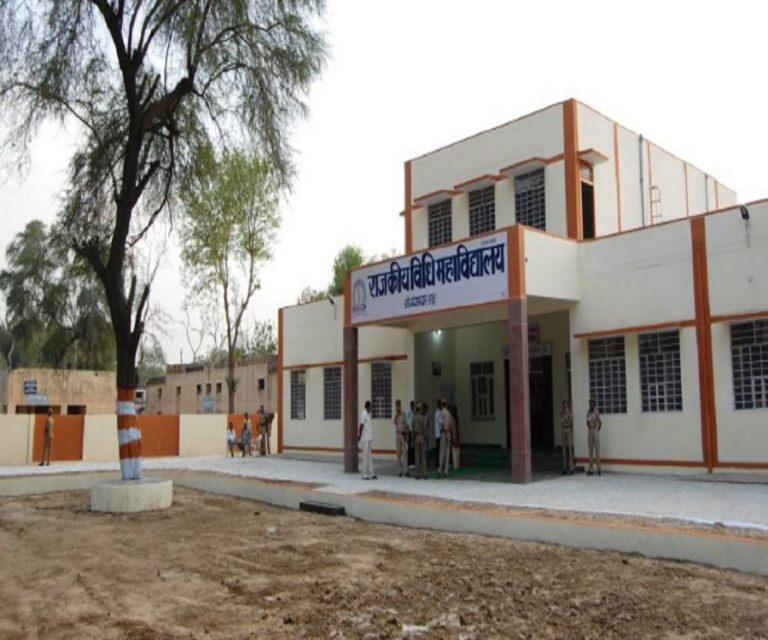
Shaheed-e-Azam Bhagat Singh Law College (SBSLC) offers a streamlined admission process for students aspiring to pursue a career in law. The college provides undergraduate (LLB) and postgraduate (LLM) law courses, both designed to equip students with the skills and knowledge needed to excel in the legal field. The admission process at SBSLC is conducted online, and interested candidates must submit their applications through the official website.
Shaheed-e-Azam Bhagat Singh Law College Admission
For the undergraduate LLB program, applicants are required to have completed their higher secondary education (12th grade) from a recognized board. The postgraduate LLM program, on the other hand, is open to those who have completed an LLB degree from a recognized university. Both programs require applicants to meet the minimum academic qualifications set by the college. Additionally, candidates may need to participate in an entrance exam or interview, depending on the course and program.
Shaheed-e-Azam Bhagat Singh Law College Application Date
The application process for Shaheed-e-Azam Bhagat Singh Law College (SBSLC) follows a well-defined schedule that ensures prospective students have sufficient time to complete the application requirements. Here are the key dates associated with the application process:
Shaheed-e-Azam Bhagat Singh Law College Application Process
The application process for Shaheed-e-Azam Bhagat Singh Law College (SBSLC) is designed to be straightforward and user-friendly. Candidates wishing to apply for either the LLB or LLM programs can begin by visiting the official college website, where the application forms are available for download. Applicants must carefully read the instructions provided on the website before filling out the form to ensure they meet all the necessary requirements.
The application process at Shaheed-e-Azam Bhagat Singh Law College (SBSLC) requires applicants to pay a non-refundable application fee. The application fee varies based on the course type and the candidate's category. The fee can be paid through online banking, credit/debit cards, or demand drafts. It is crucial that candidates check the fee structure before submitting their applications to avoid any discrepancies.
Here is the breakdown of the application fees for both undergraduate and postgraduate courses:
Shaheed-e-Azam Bhagat Singh Law College Eligibility Criteria
Shaheed-e-Azam Bhagat Singh Law College (SBSLC) sets specific eligibility criteria for its LLB and LLM programs. The college aims to admit students who demonstrate both academic excellence and a passion for the legal profession. Below are the detailed eligibility requirements for each program:
Shaheed-e-Azam Bhagat Singh Law College LLB (Undergraduate) Eligibility:
Candidates must have completed their higher secondary education (12th grade) from a recognized board with a minimum percentage (usually 45% or above).
For candidates from reserved categories, the minimum percentage requirement may be relaxed according to government norms.
Candidates who have completed a diploma in law are also eligible to apply for the LLB program, provided they meet the age criteria.
Applicants must be in the age range of 17 to 30 years (relaxation for reserved categories may apply).
Shaheed-e-Azam Bhagat Singh Law College LLM (Postgraduate) Eligibility:
Candidates must have completed their LLB degree (3-year or 5-year course) from a recognized university with a minimum aggregate of 50% marks.
Applicants with a valid CLAT (Common Law Admission Test) score may be given preference, though SBSLC also conducts its own entrance exam for selection.
Candidates with work experience in legal practice or research may be given preference in the selection process.
Shaheed-e-Azam Bhagat Singh Law College Course Details
1. LLB (Undergraduate):
Duration: 3 years
Mode: Full-time
Focus: General legal education covering multiple fields such as constitutional law, criminal law, and family law.
2. LLM (Postgraduate):
Duration: 2 years
Mode: Full-time
Focus: Specialized legal education with options in areas like corporate law, human rights, and international law.